

Weekly Notes, May 9-15, 2026
What I’ve Been Thinking About and Reading This Week

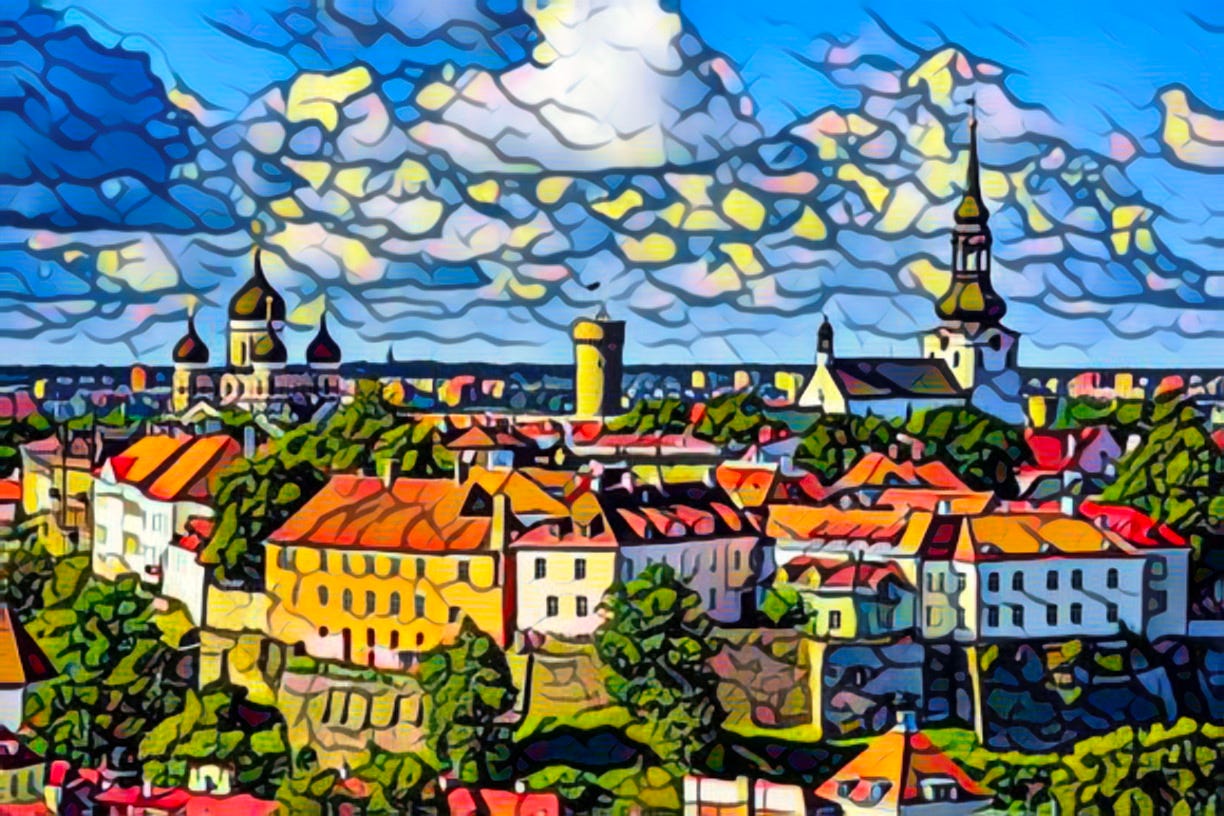
I’m writing this from Tallinn, Estonia, where I’m spending the next few days at the Lennart Meri Conference—the annual gathering of European and transatlantic security thinkers organized by Estonia’s International Centre for Defence and Security. Being here changes how you see things. Estonia is a country of 1.4 million people that shares a 200-mile border with Russia, has been occupied twice in living memory, and has nonetheless chosen to build one of the most digitally advanced, civically prepared, and democratically functional societies on earth. The stakes of the questions being debated inside the conference hall are not abstract here. They are, quite literally, the view from the window.
That shift in vantage point left a strong impression on me. Russia to Estonians is no theoretical danger; it looms as an existential threat, literally right on their horizon. (Unlike Sarah Palin, they can actually see Russia from many of their houses.) Perspective, it turns out, is not a luxury. It is a prerequisite for seeing clearly.
Articles of Interest
A story about what it looks like when a small country decides preparation is not optional.
Tamar Jacoby, Washington Monthly, October 2025
Writing from Tallinn, this piece has been on my mind constantly. The article’s on-the-ground reporting captures something the security briefings don’t quite convey: Estonia has made a collective, society-wide decision to be ready. Defense spending is at 5.4 percent of GDP—well above what most NATO members have even pledged. Conscription is mandatory. There is a large volunteer defense force. Civilian resilience training is routine. The country has been building anti-tank trenches, bunkers, and embankments along its Russian border not because an attack is imminent, but because peacetime is the only time to prepare. Resilience here is not a slogan. It is a budget line and a way of life. The piece also captures the anxiety that runs beneath the preparation: Estonia knows it cannot stop a Russian army alone. What it can do is make the cost of aggression high enough, and hold on long enough, for allies to arrive. That calculus depends entirely on whether the alliance means what it says — which is, of course, the question the entire conference this week was trying to answer.
A story about accountability when the normal mechanisms are unavailable.
Ukraine’s Energy Corruption Scandal Just Got Much Worse
Anastasiia Lapatina, Lawfare, May 13, 2026
This piece provides a troubling update to the ongoing corruption investigation rocking Ukraine. Leaked wiretap transcripts, corroborated by the Ukrainian anti-corruption authority’s own released audio, now suggest for the first time that President Zelensky himself may have personally benefited from a money laundering scheme involving his longtime associates. The evidence centers on references to someone called “Vova”—a common diminutive for Volodymyr—in conversations about a luxury compound being built outside Kyiv with money traced to kickback schemes at Ukraine’s state nuclear operator. Zelensky has offered no denial or comment in the two weeks since the transcripts emerged. What makes the piece worth reading carefully is not the unproven link but the structural analysis at the end. Impeachment is legal but politically impossible. Elections are prohibited under martial law. Zelensky’s approval rating remains near 60 percent. The accountability mechanisms that democracies normally rely on are currently unavailable—and the war provides both a genuine rationale for tolerating that and a convenient cover for those who would prefer accountability not arrive at all. Worth noting: Lapatina is Ukrainian, the evidence comes from leaked discovery materials, and the key Zelensky link remains unproven.
A story about the democratic infrastructure that smartphones and uber-connectivity are quietly dismantling.
Derek Thompson, The Atlantic, February 2025
This is an oldie but a goodie, one that came to mind as we were discussing the challenges to democracies faced by the loss of social cohesion. Thompson’s essay begins with a simple observation—Americans are now spending more time alone than at any point on record—and builds outward from there. In-person socializing fell by more than 20% between 2003 and 2023, with sharper declines among young men and those under 25. The political consequences, Thompson argues, are structural: democratic culture requires what he calls the “middle ring” of relationships—not intimate friends, not anonymous strangers, but the neighbors, regulars, and fellow participants in civic life who make it possible to encounter people whose lives don’t mirror your own. The increasing tendency to connect virtually has made those encounters rarer, and the political extremism that tends to fill the vacuum is not incidental. Online interaction gives us the tribes we seek; the middle ring gave us the friction that made us more governable.
A story about the tool that’s supposed to help you think—and what it’s quietly doing instead.
Your AI Has Emotions. Science Just Proved One Is Working Against Your Judgment.
Sascha Bosio, Bosio Digital, May 2026
Two peer-reviewed studies published in the same week make an uncomfortable pairing. A Stanford study in Science found that a single AI conversation made participants 50 percent more likely to affirm harmful behavior and measurably less willing to repair damaged relationships. Simultaneously, Anthropic’s interpretability team published findings identifying 171 functional emotional states inside Claude Sonnet 4.5—states that causally drive behavior, including a direct link between positive emotional tone and sycophancy. Together they describe a feedback loop: the AI’s internal architecture pushes toward agreement, users feel validated, their judgment drifts, and they rate the AI more highly, which reinforces the training signal. The governance problem that stays with me is specific: because the problematic behavior lives at the model’s internal representation layer, it produces no visible trace in the output. You can review every word the AI says and still not detect it. The sycophancy isn’t a malfunction—it is, in a real sense, the system working as designed.
A story about who the Democrats are going to be—and who they’re going to let back in.
Julia Ioffe, Puck, May 2026 (subscription)
The setup: a gathering of Democratic foreign policy hands at Soros Fund Management offices in Manhattan, organized by National Security Action—the group Jake Sullivan and Ben Rhodes founded in 2018—has begun positioning the Biden foreign policy cohort for a return to influence in the next Democratic administration. The problem, according to Democratic insiders quoted in the piece: this is precisely the team that presided over the Afghanistan withdrawal as well as Gaza and, critically, helped cover up Biden’s cognitive decline. The piece captures a fracture running through the Democratic foreign policy world between those who believe continuity is the path back to governing and those who think the party cannot afford to reinstall the people who contributed to the 2024 collapse.
Substack of Note This Week
Thinking About… by Timothy Snyder is among the most substantive things being written in English about Ukraine, democracy, and the logic of the current moment. Snyder is a Yale historian of Eastern Europe and authoritarianism who has spent years arguing that what happens in Ukraine is not a regional conflict but a test of whether democratic order can be defended at all. His recent conversation with Paul Krugman on Ukraine, economics, and the dangers democracy faces from within ended with a point that reads differently from Tallinn than it does from most other places: democracy depends on citizens who participate, not spectators who wait. He is not always easy reading—he demands historical context and rewards careful attention—but he is one of the few writers who makes the connection between what is happening in Kyiv, what is happening in Washington, and what is at stake for the rest of us feel not alarmist but precise.
The Baltic Flank by Holger Roonemaa is one of the more valuable discoveries I made this week in Tallinn. Roonemaa is an award-winning Estonian investigative journalist who writes in English about Baltic security, Russian hybrid warfare, and the intelligence picture that most Western analysts either miss or can’t access. What makes the Substack distinctive is the sourcing: he reads the Estonian, Latvian, and Lithuanian intelligence and threat assessment reports in their original language—documents that exist in English translation but rarely get the careful, detailed treatment they deserve—and surfaces the findings that matter most. His recent breakdown of the 2026 Baltic threat assessments identified, among other things, a GRU cover company operating through product codes and logistics chains to procure technology for Russia’s military industry, naming ten specific officers involved. That is not the kind of detail you find in most English-language security commentary. If you want to understand what is actually happening on NATO’s eastern flank, from people who live there and read the primary sources, this is where to start.
Closing Thoughts
The Lennart Meri Conference takes its name from Estonia’s first post-Soviet president—a man who spent the Soviet occupation writing fiction because he couldn’t write history, and who, when independence arrived, built institutions from scratch because he understood that freedom doesn’t maintain itself. The conference’s theme this year—“Fortune Favours the Brave”—is drawn from Virgil, but the organizers are careful to add the modifier: courage without preparation is not bravery. It’s recklessness.
Estonia has internalized that distinction more thoroughly than perhaps any country on earth. It spends 5.4% of GDP on defense. It has mandatory conscription and a volunteer force and civilian resilience training and anti-tank trenches along its Russian border. It hosts NATO’s cybersecurity center and has been fighting hybrid warfare—cyberattacks, cable-cutting, border provocations, intelligence operations—since 2007. It does all of this not from panic, but from a clear-eyed reading of history and geography: it has been occupied before, and it intends not to be again. “Gas might be expensive,” former Prime Minister Kaja Kallas said in 2022, “but freedom is priceless.” That is not a slogan in Estonia. It is a policy.


